
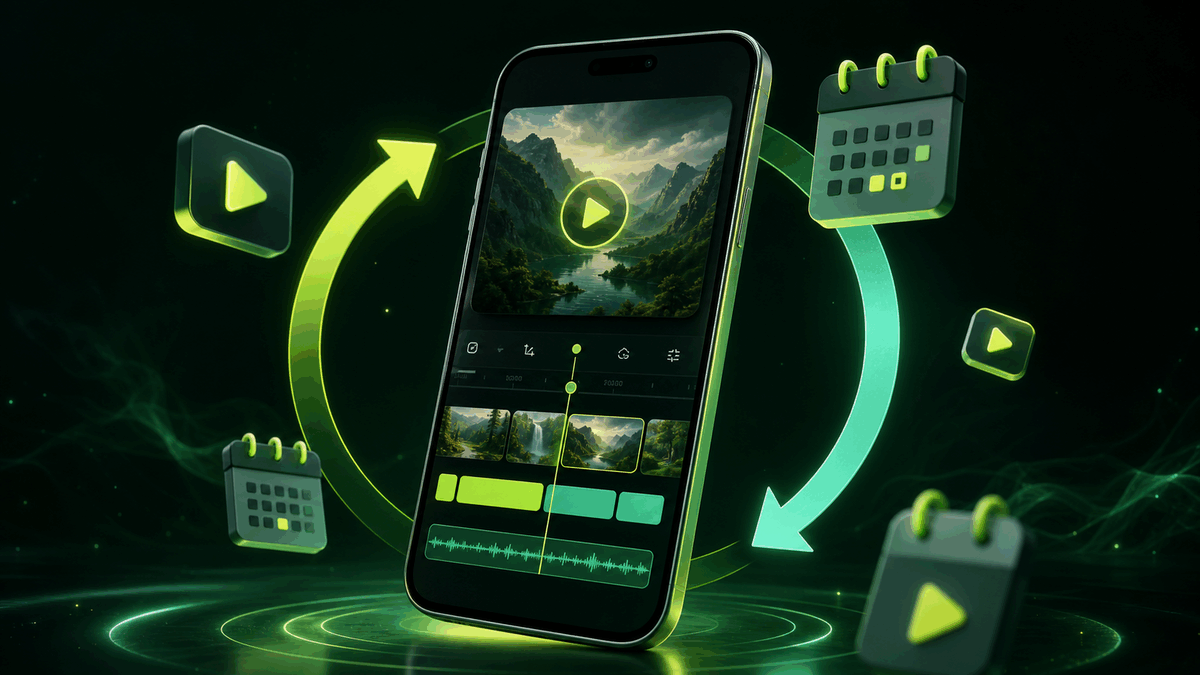
Short-form video rewards one thing above all: showing up again. Not perfectly, not daily at dawn — just steadily enough that viewers learn you are worth following and you learn what earns their attention. Intensity burns out; rhythm compounds.
This guide builds you a repeatable rhythm in five steps: a sustainable pace, a weekly idea batch, focused filming sessions, a simple publishing routine and a light monthly review. It works whether you post twice a week or five times.
Pick a rhythm you can keep
Start by choosing the pace you could hold for three months without dread. For many creators that is two or three videos a week; for teams with editing help it might be five. The right number is the one that survives your worst week, because the algorithm never sees your excuses — it only sees the gaps.
Write your rhythm down as a plain sentence: “Three short videos a week, posted Monday, Wednesday and Friday.” Vague intentions fade; a posted schedule, even one only you see, creates gentle accountability.
Batch ideas once a week
Ideas are cheapest in batches and most expensive under pressure. Spend thirty minutes each week filling an idea bank — a notes page, a chat with yourself, a whiteboard — so filming days never start with a blank stare.
- Questions your audience asks again and again, answered in under a minute.
- Opinions you hold that beginners would find surprising.
- Before-and-after moments from your own work or process.
- Trends and sounds you can adapt without copying outright.
- Winning older posts, remade with a sharper hook.
Aim for twice as many ideas as you need. Surplus is the point: choosing from ten ideas feels creative, while squeezing blood from one feels like a chore.
Film in focused sessions
Filming one video at a time wastes your best energy on setup. Instead, film in batches: one session, several videos, the camera already rolling. For example, a tidy weekly session might look like this:
- Set up once (10 min): light, background, tripod and a glass of water — then do not touch anything.
- Warm up (5 min): record one throwaway take to loosen up and check sound.
- Film the batch (45–60 min): work through three to five ideas; two takes maximum each.
- Log selects (10 min): star the best takes so editing starts with decisions already made.
Done this way, a week of content fits into a single evening. Keep your setup semi-permanent if you can — every minute of friction you remove is a future video saved.
Publish and engage on schedule
Post at consistent times so your habit, not your mood, decides. Ignore the myth of one magic posting hour; pick times when you can be online for thirty minutes afterwards, because the reply window matters more than the timestamp.
The first thirty minutes after posting are part of the post. Show up, reply with substance, and turn viewers into regulars.
Answer early comments with more than an emoji. Ask a follow-up question. Heart the thoughtful ones. This small ritual teaches viewers that your comment section is worth visiting — and teaches you what your audience actually cares about.
Review monthly, adjust lightly
Once a month, spend twenty minutes with your numbers before changing anything. Which hooks held viewers past three seconds? Which topics earned saves and follows rather than passing likes? Our guide to meaningful metrics to watch as your audience grows gives you a simple scorecard for exactly this review.
Adjust one thing at a time: a stronger hook style, a new series, a different posting day. Rhythms improve through small, deliberate tweaks — never through frustrated overhauls. And as always, create within each platform’s rules; accounts built on genuine content survive every algorithm shift.
A repeatable rhythm is beautifully boring: ideas batched weekly, filming done in sessions, posting on schedule, reviewed monthly. Build the loop once, then let it carry you while you focus on the fun part — making things people love.
When your content plan needs a boost, explore the PulseGrow services with clear details upfront — or create a free account and track every order from one dashboard.